
The Perils of Bureaucratization in Higher Education of Bihar
- Post By PoliticIndia.com on
- 19/Jul/2026
Khagendra Kumar
Chief Editor
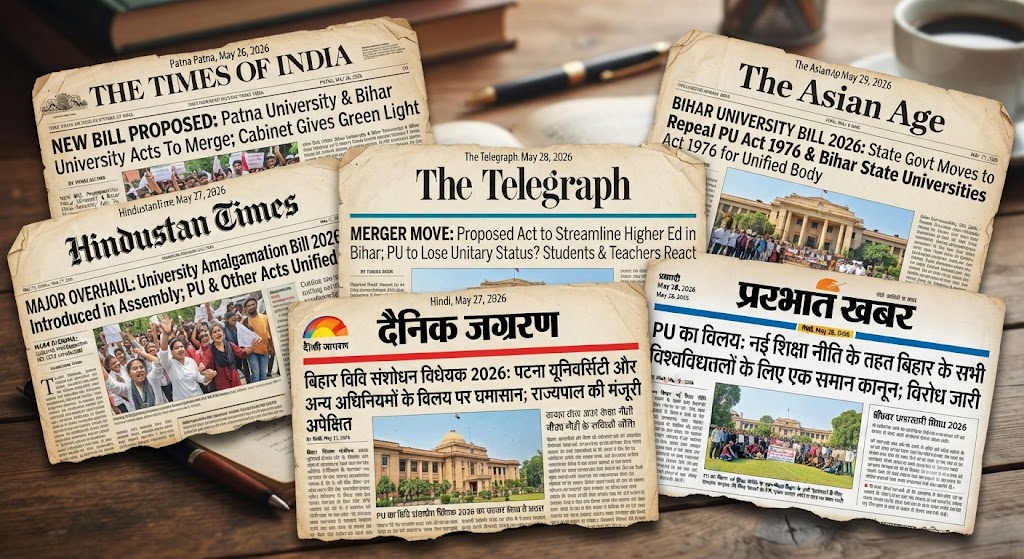
Recent reports indicate that the Government of Bihar is drafting comprehensive legislation to merge the Patna University Act of 1976 and the Bihar State Universities Act of 1976. This proposed legislation seeks to place constituent colleges under the direct secretarial control of the Department of Education, appoint ‘Higher Education Officers’ in every district to monitor colleges, and—most alarmingly—bar college and university teachers from participating in active political activities.
If implemented, this approach threatens to tarnish the spirit of the National Education Policy (NEP) 2020 and stifle the critical pedagogy essential for a thriving academic environment.
1. The Conflict with NEP 2020 Objectives
The NEP 2020 envisions a future where smaller, affiliated colleges are phased out in favor of large, multidisciplinary institutions capable of graded autonomy. These institutions are expected to evolve into ‘teaching universities’—hubs that balance high-quality instruction with research and pedagogical innovation.
Reducing Bihar’s colleges to mere administrative extensions of the Education Department, governed by a rigid bureaucratic structure, is antithetical to these national objectives. Centralized control rarely fosters excellence; instead, it tends to produce ‘misfits.’ If the government truly believes in this bureaucratic model, it should mandate that the wards of all government servants be educated within this system. Such a requirement would likely face significant opposition, as those in positions of power prioritize the fundamental right to choose quality education for their children.
2. Silencing Teachers and the Erosion of Autonomy
The provision barring university and college teachers from active political participation is an overt attempt to silence critical voices and discourage legitimate critique of the state and its policies.
Teachers and bureaucrats are fundamentally different by nature and function. Bureaucrats are tasked with executing orders, laws, and regulations formulated by the state. Conversely, teachers trade in knowledge and the "adventure of ideas." To impose the service conditions and restrictive mentality of a bureaucracy upon the teaching community is a grave mistake.
The Policing of Ideas: True academic progress is stifled when teachers are policed for expressing independent socio-political views.
The Role of Mentorship: A college’s progress—and its path to gaining university status—depends upon the autonomy given to teachers to nurture ideas rather than enforce conformity.
Democratic Values: History is replete with examples of college youth and teachers being at the forefront of re-establishing democratic values during times of crisis.
3. The Student Perspective
The undergraduate years are a transformative period (3–4 years) during which students often exercise their franchise or witness their peers doing so for the first time. This is a critical developmental phase where students begin to engage with the socio-political and economic realities affecting their country and the world.
For youths with ambitions of serving the nation, an understanding of these forces is imperative. They require a free environment—a campus without the ‘policing of ideas’—where they can raise questions, evaluate arguments, and form opinions. It is their independent evaluation and intellectual engagement that ultimately contribute to the progress of the state. If we limit the college experience to the rote transfer of classroom knowledge while silencing mentors, we are doing a disservice to the next generation.
4. The Erosion of Curriculum and Institutional Identity
Current trends suggest a move toward a uniform curriculum framework, which may undermine the quality of education.
Need for Diversity: Universities have been stripped of their duty to construct curricula based on need assessments, resource availability, and context-specific learning.
The Myth of Uniformity: While a framework is necessary, a ‘one-size-fits-all’ curriculum fails to account for institutional diversity. Quality teaching thrives on flexibility, not standardization.
Institutional Autonomy: The proposal to repeal individual university acts in favor of a "common act" is a mistake. Each university requires a bespoke legislative framework that reflects its unique history and academic mission.
A Final Warning: The Case of Patna University
Repealing the Patna University Act to bring it under a common state-wide governance structure would be a blunder of historic proportions. Such a move risks turning a premier institution into a mere administrative outpost, vulnerable to political influence and transfers, which will inevitably degrade its academic excellence.
If the goal is to create an excellent education system, the Government of Bihar must dismantle this bureaucratic model. It must restore full academic and administrative autonomy to Higher Education Institutions (HEIs). Furthermore, it must be remembered that while political forces can be hijacked by those in power, the democratic legitimacy of the state rests on the people and their institutions. To enslave colleges under bureaucratic forces is to erode the very foundation of an informed, democratic society.
Follow-up Question: Given that these legislative changes could fundamentally alter the nature of higher education in Bihar, what specific channels or forums do you believe are most effective for teachers to organize and advocate for their academic autonomy against this proposed legislation?
BLOG
Saving University Autonomy: Why Teachers Must Act Without Sacrificing the Classroom
Read More
Saving University Autonomy: Why Teachers Must Act Without Sacrificing the Classroom
Read More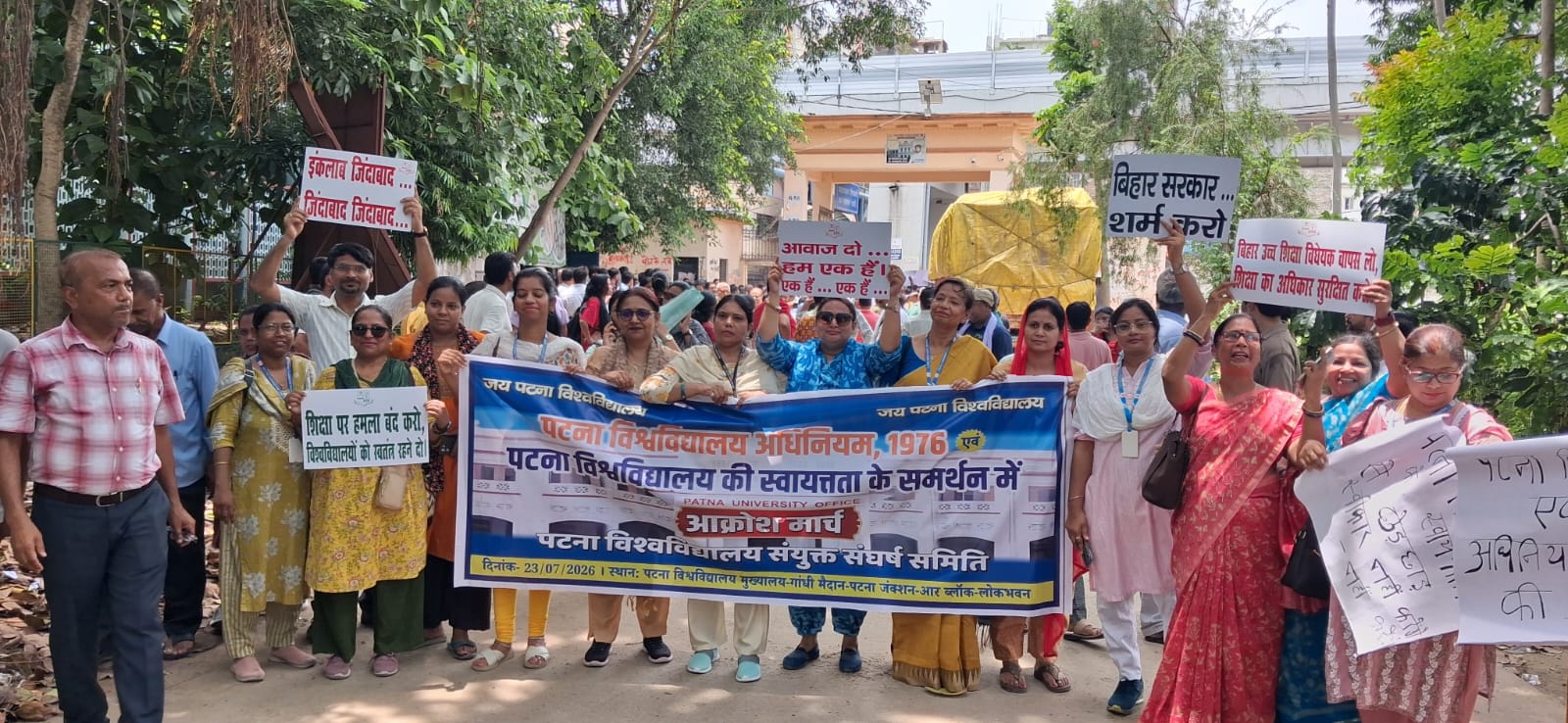
उच्च शिक्षा, स्वायत्तता और नौकरशाही का अतिक्रमण: प.वि.वि. के संदर्भ में एक गंभीर आत्ममंथन
Read More
The Perils of Bureaucratization in Higher Education of Bihar
Read More
The Erosion of University Autonomy: A Call for Consultative Governance in Higher Education Institutions of Bihar
Read More